Umesh Pal Panwar: A shop to support his family again
A new shop helped Umesh Pal Panwar resume business and meet daily expenses after the Dharali disaster damaged his home, orchard and sources of income.

Life before support
Umesh Pal Panwar's family earned a living through several activities in Dharali. A small shop, seasonal tourism, apple orchard income and labour during quieter periods helped support a household that included children and older family members.
The combination allowed work to shift with the seasons. The shop provided a local base, while produce, visitors and labour created other opportunities to earn. The family's stability depended on being able to keep these different activities going.
The disaster of 5 August 2025 disrupted them together. The shop was washed away and its goods were lost. The house suffered major damage, with cracks and rooms filled with silt. Erosion and uprooted trees damaged the orchard, and the harvest was lost.
For Umesh, the challenge was larger than restarting one interrupted task. The family had lost stock, usable working space and several sources of income. The remaining daily expenses had to be met while the places that had supported the household needed repair or replacement.
A shop was therefore an important part of the recovery plan. It could provide somewhere to keep goods securely and a place from which to trade. Restoring that base would give him a practical way to begin earning again while the wider consequences of the disaster were still being managed.
How we helped
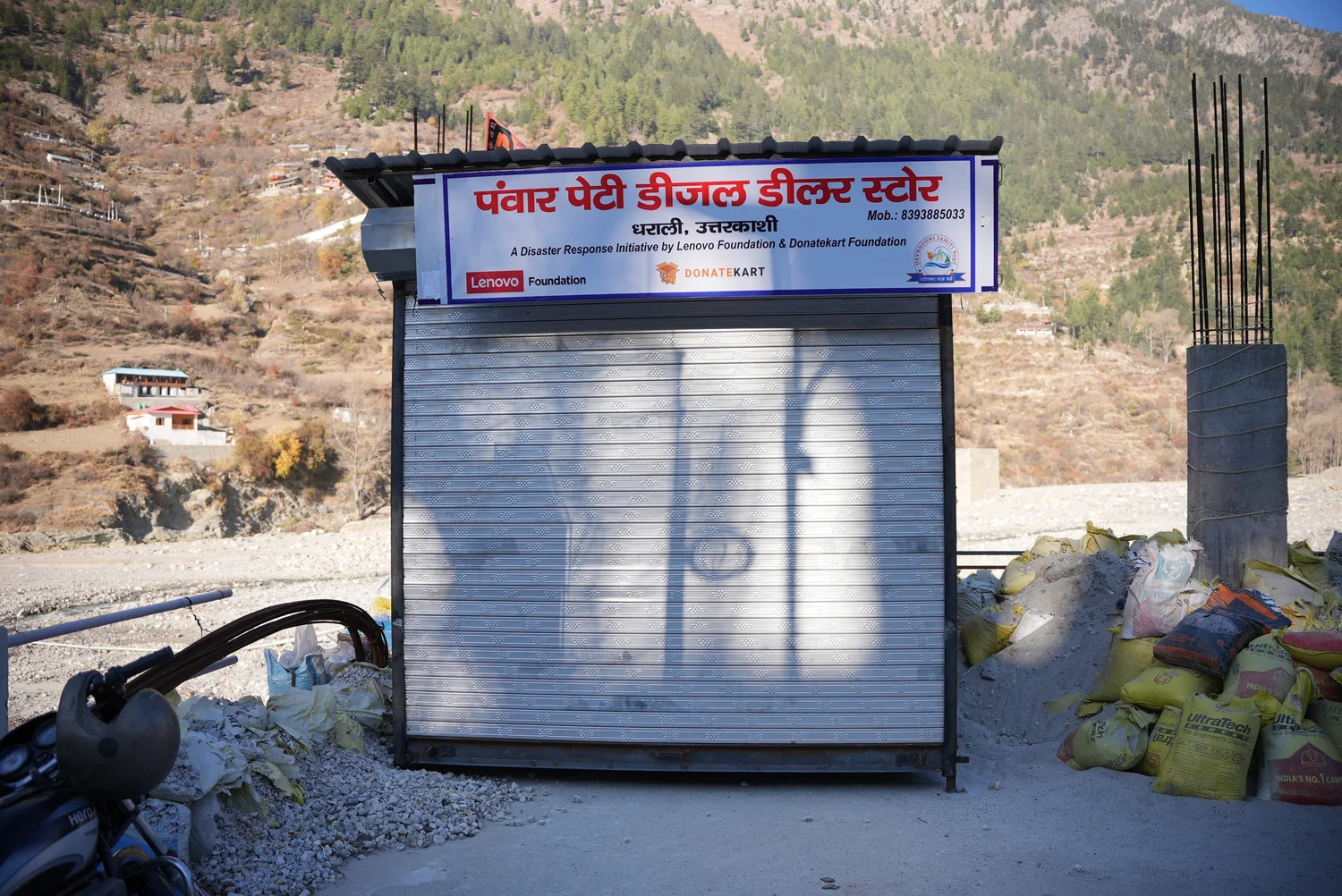
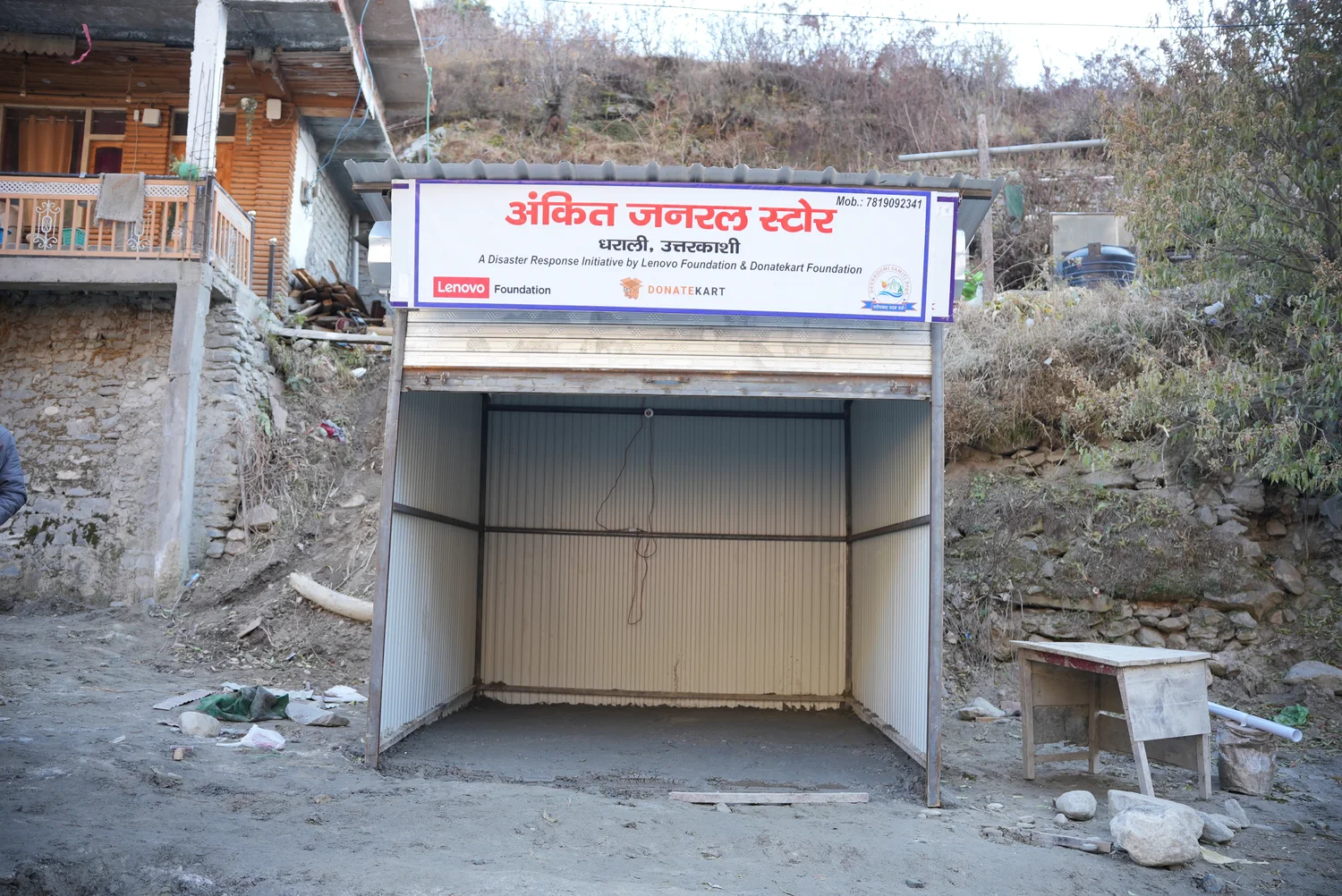
Dev Bhoomi Samiti supported Umesh through the Dharali shop construction project, made possible with support from Donatekart and Lenovo Foundation. The project focused on creating new premises for a livelihood that had lost its physical base.
The team assessed the damage to his home, shop and orchard and reviewed the family's need for assistance. A construction site was identified on his land, with local verification and preparation before the new structure was built.
Debris was cleared from the selected area, and the work provided a tin shop with space for goods and business activity. This gave Umesh a replacement for an essential part of the trade he had carried on before the disaster.
The assistance addressed a practical obstacle. His experience of running a shop remained with him, but experience needed premises and storage to become useful again. The new structure helped bring those parts of the business back together.
The project linked construction with livelihood recovery. It provided a place Umesh could use to restart his general store, enabling him to take the next steps in earning for the household through his own work.
What changed
Umesh restarted his business in the new shop. Stock could be kept securely, and trading had a place again. Those changes helped restore an income source after the disaster had interrupted work across several parts of the family's livelihood.
As business resumed, daily expenses became more manageable and the household gained stability. The support also helped the family continue meeting needs connected with the children's education.
Umesh regained confidence through having a workable starting point. The losses to the house and orchard remained part of the wider recovery, while the shop offered something that could be put to use immediately for earning.
The change in this story is the return of a practical routine: keeping goods, opening a business and using the income to meet family needs. A structure built through the project became a place where the household could begin moving forward.
Umesh's experience shows how a focused intervention can support a larger recovery. Restoring the shop gave him the means to restart familiar work and provided a foundation for addressing the family's remaining needs step by step.