Buddhi Singh Panwar: A place to start trading again
After the Dharali disaster, a shop built with Dev Bhoomi Samiti, Donatekart and Lenovo Foundation support helped Buddhi Singh Panwar resume his livelihood.
Life before support
Buddhi Singh Panwar's family had lived in Dharali for generations. Their livelihood was built around the local economy: a small hotel, a grocery and general store, and rooms offered to seasonal visitors. Together, these activities supported a household that included older family members and school-going children.
The businesses connected family life with the rhythm of the village. Goods had to be stored for sale, visitors needed accommodation and the household depended on the income these activities brought. The home and the spaces used for work were therefore closely tied to the family's stability.
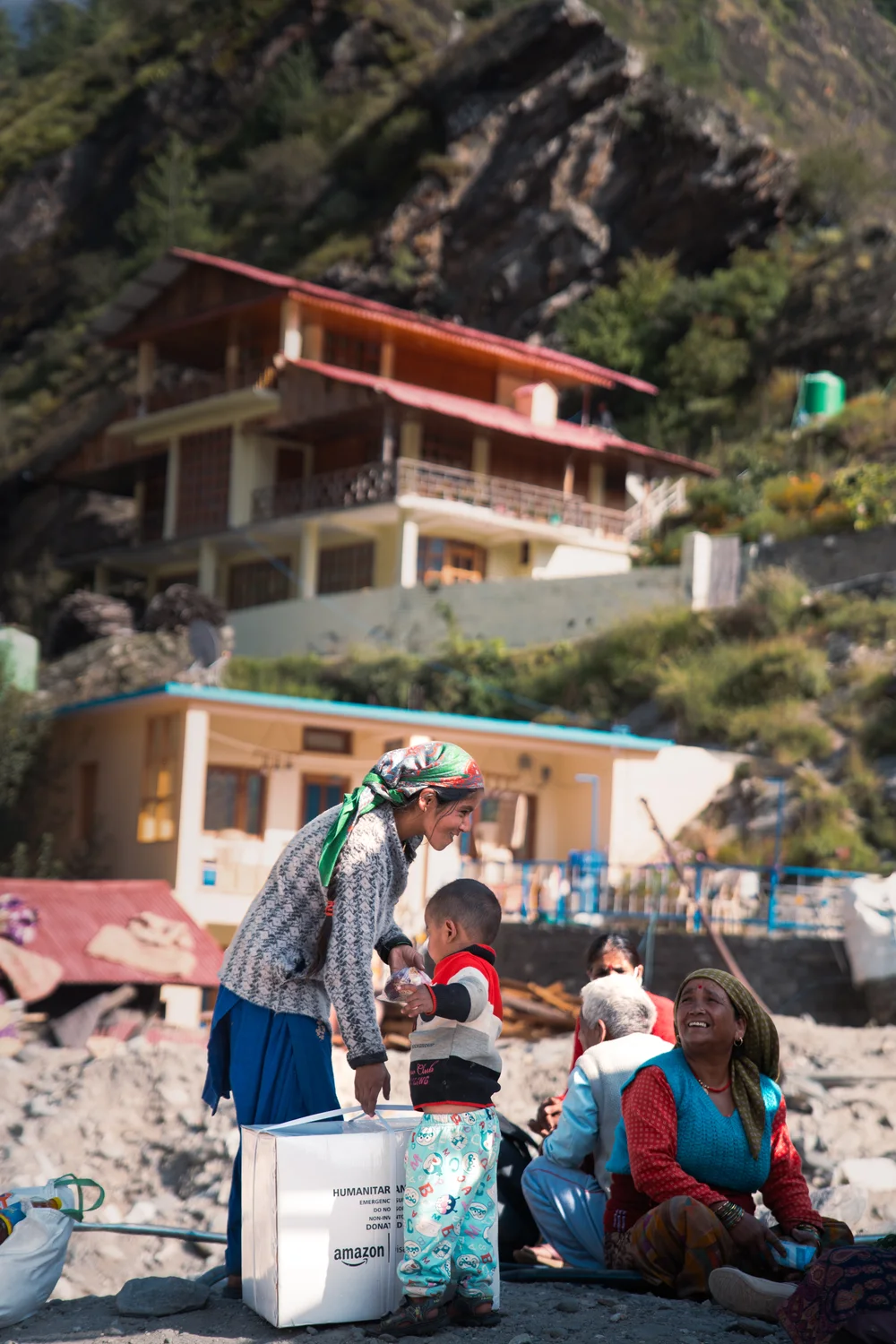
The disaster of 5 August 2025 broke that connection abruptly. Buddhi Singh's house collapsed, and the hotel and shop were swept away or buried by debris. Stock and household belongings were lost. Several sources of income stopped at the same time.
He was left without a usable place to restart business. Even if goods could be obtained again, there had to be somewhere to keep them and a place from which to serve customers. The loss of buildings was also a loss of the basic conditions needed to earn.
For the family, immediate needs and longer-term recovery became inseparable. Daily expenses continued while the means of meeting them had disappeared. A practical place to work was an important step towards restoring income and beginning the slower task of rebuilding life after the disaster.
How we helped
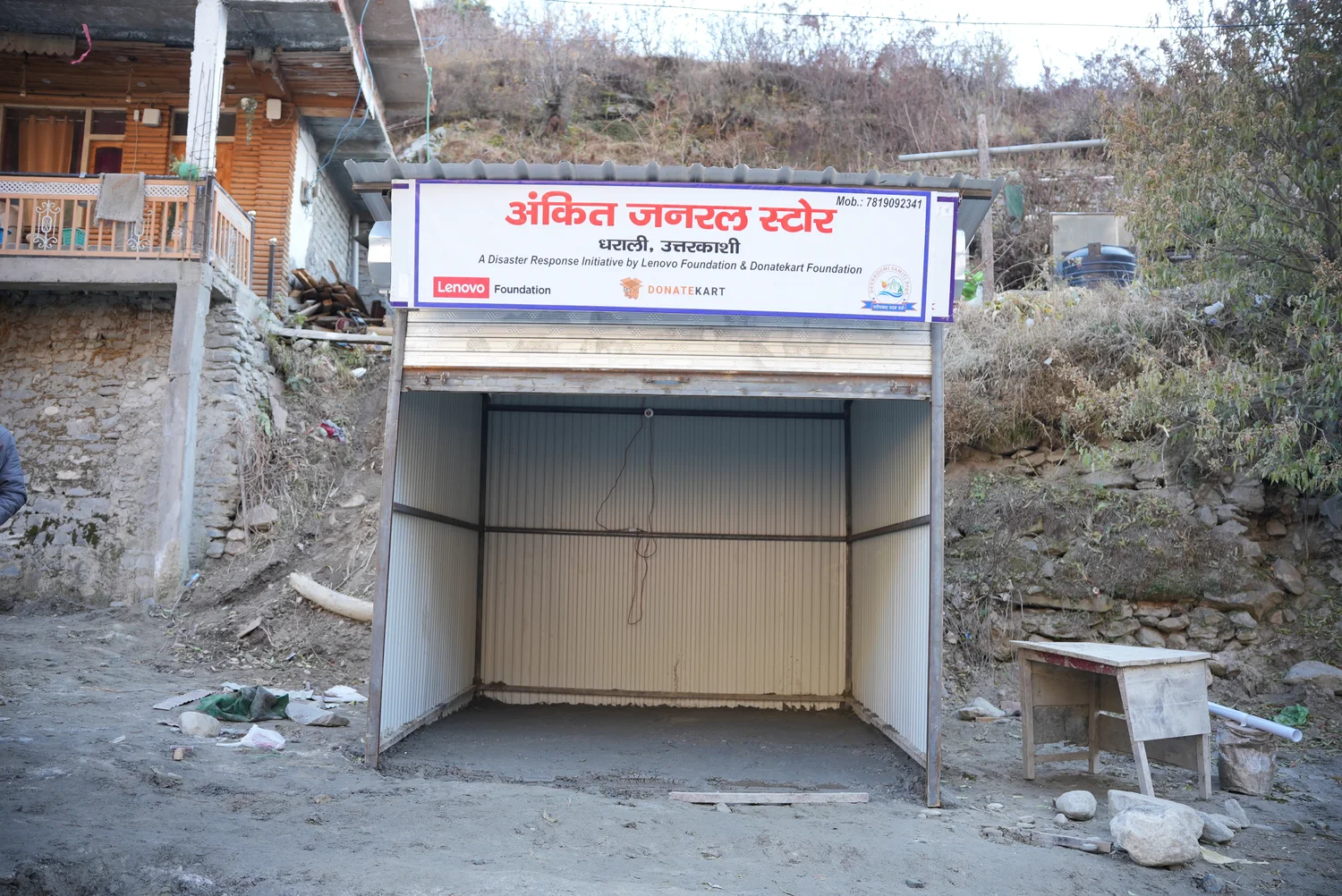
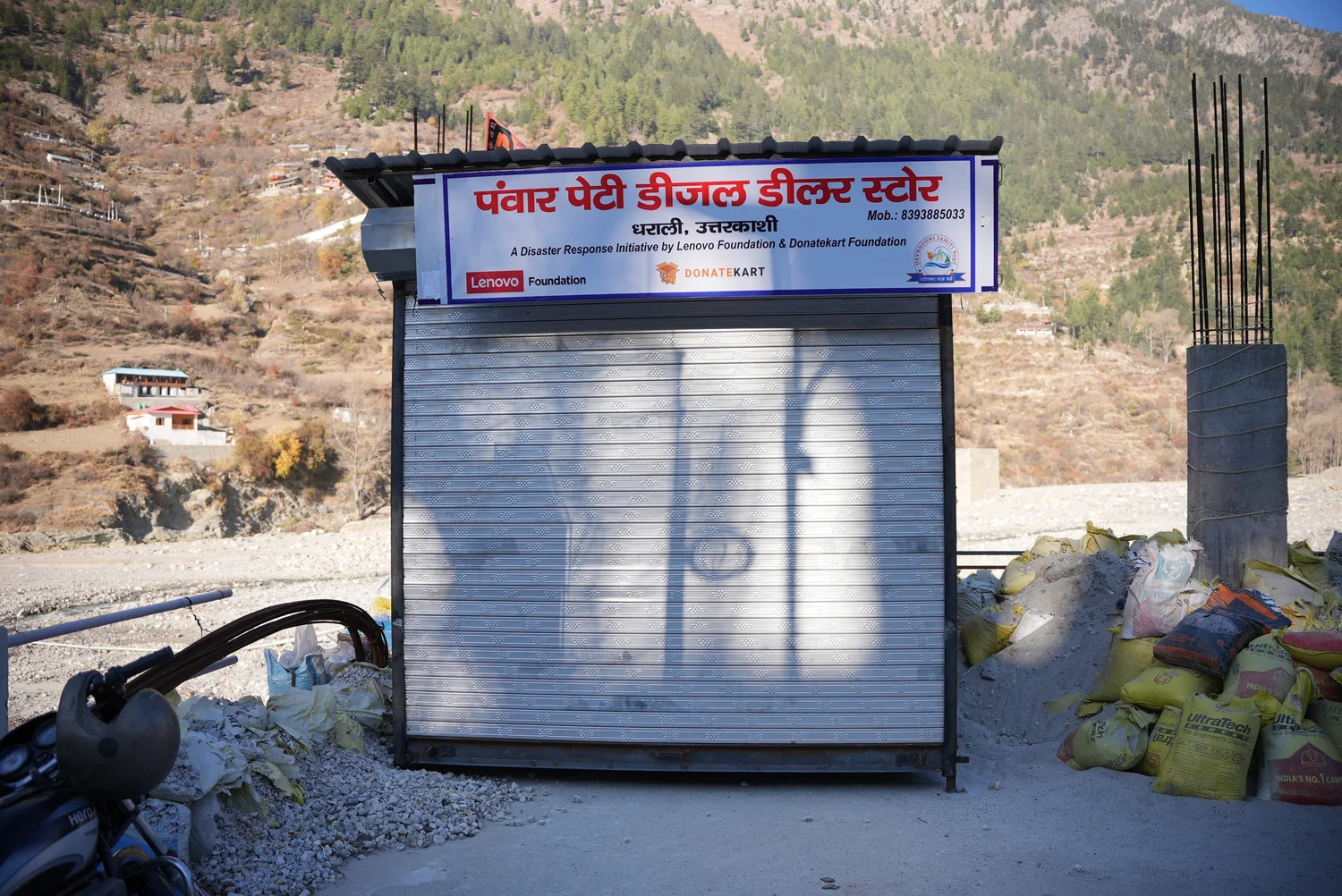
Dev Bhoomi Samiti included Buddhi Singh in the Dharali shop construction project, supported by Donatekart and Lenovo Foundation. The work focused on providing a usable shop from which he could resume trading.
Before construction, the team assessed the damage and the family's circumstances. Local verification and the involvement of the Panchayat helped establish land ownership and the suitability of a site for the new structure. This preparation connected the assistance with a place where it could be put to practical use.
The selected location was beside the former hotel site. Debris removal cleared the area, and the construction work created a new tin shop. For Buddhi Singh, this replaced an important missing part of the business: premises where goods could be kept and trade could begin again.
The completed shop offered covered working space and storage. It was a focused response to the livelihood problem identified after the disaster. The project gave him infrastructure he could use with the business experience he already had.
Dev Bhoomi Samiti coordinated the rehabilitation work with the project supporters and local stakeholders. Together, they provided a shop space the family could use to begin work again.
What changed
With the shop in place, Buddhi Singh was able to resume business and begin earning again. Goods had somewhere to be stored, and trading had a fixed location. These were practical changes after a period in which the loss of premises had prevented him from restarting.
The return of work brought greater stability to the family. Earning again provided a way to meet household needs and gave him confidence to approach the remaining task of rebuilding gradually.
The new shop became one part of that recovery. His earlier losses had involved a home and several business activities, so recovery extended beyond one structure. The shop gave him a useful starting point from which to make progress.
Buddhi Singh's story illustrates how livelihood assistance can build on skills a person already has. He knew how to run a business. Restoring a place to do that work helped reconnect his experience with the opportunity to support his family.