Satendra Singh: Restarting trade after Dharali’s disaster
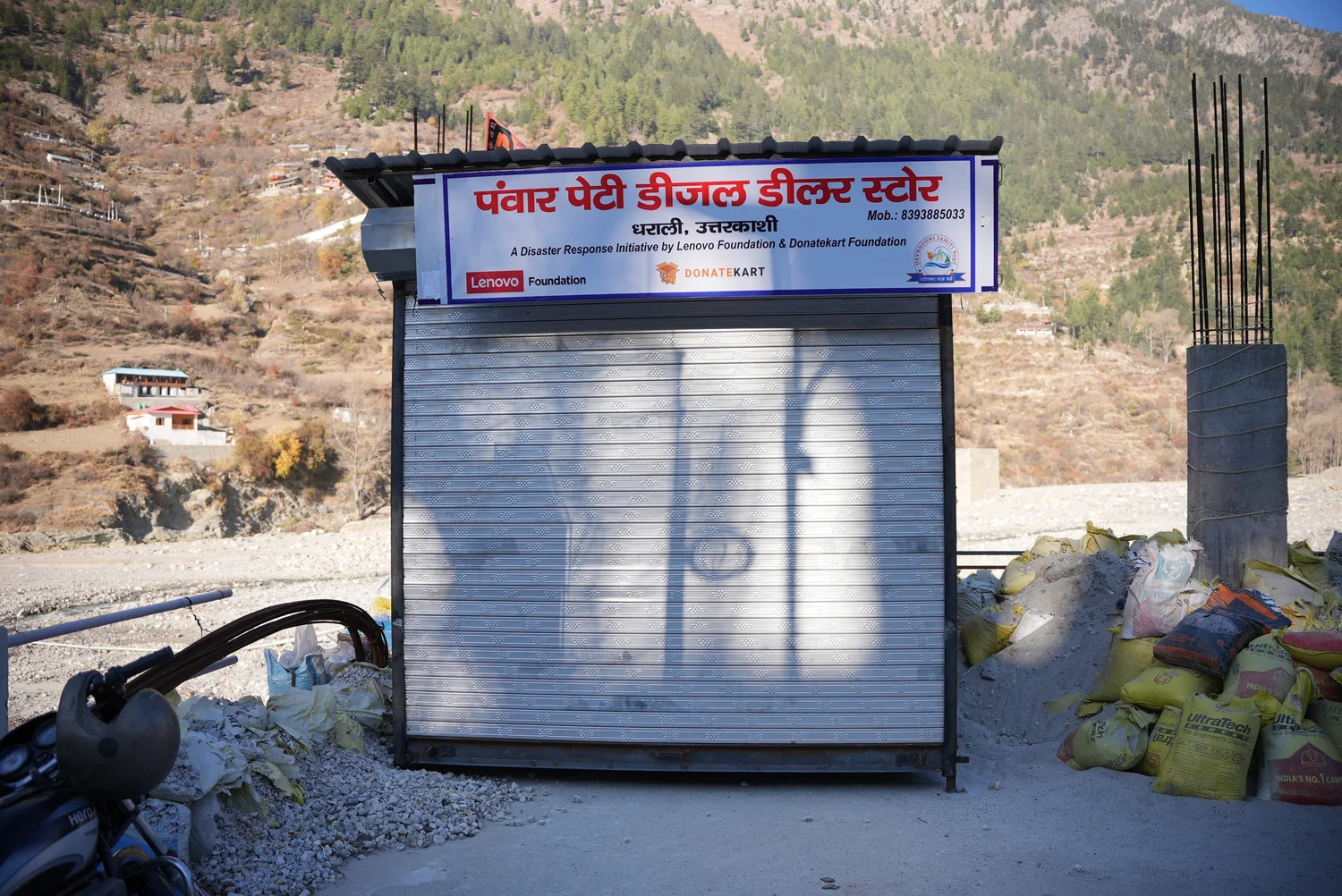
With his hotel and orchard damaged, Satendra Singh received a shop through Dev Bhoomi Samiti’s Dharali rehabilitation project to help restart local trade.
Life before support
Satendra Singh's household relied on several sources of income in Dharali. A small hotel brought business from visitors, an apple orchard supported the family seasonally, and local transport work added income when it was available. These activities helped the household manage the changing demands of life in the mountains.
The orchard was particularly important. It represented both a source of earnings and work that depended on the land, trees and harvest. The family's income was therefore closely connected to the condition of the surrounding area.
After the disaster of 5 August 2025, several parts of that livelihood were damaged together. The house and hotel suffered cracked walls, roof damage and mud entering the ground floor. In the orchard, trees were uprooted, the harvest was lost and erosion damaged the land and irrigation channel.
The effect on income was immediate. Work could not simply continue as it had before, and the loss of the harvest removed an important seasonal source of money. The family had to manage daily needs while facing damage across the activities that had previously supported them.
Satendra needed a practical way to begin earning during this period of disruption. Restoring the orchard and damaged buildings would take more than a quick intervention. A place to trade offered another route into work using his knowledge of local goods and produce.
How we helped
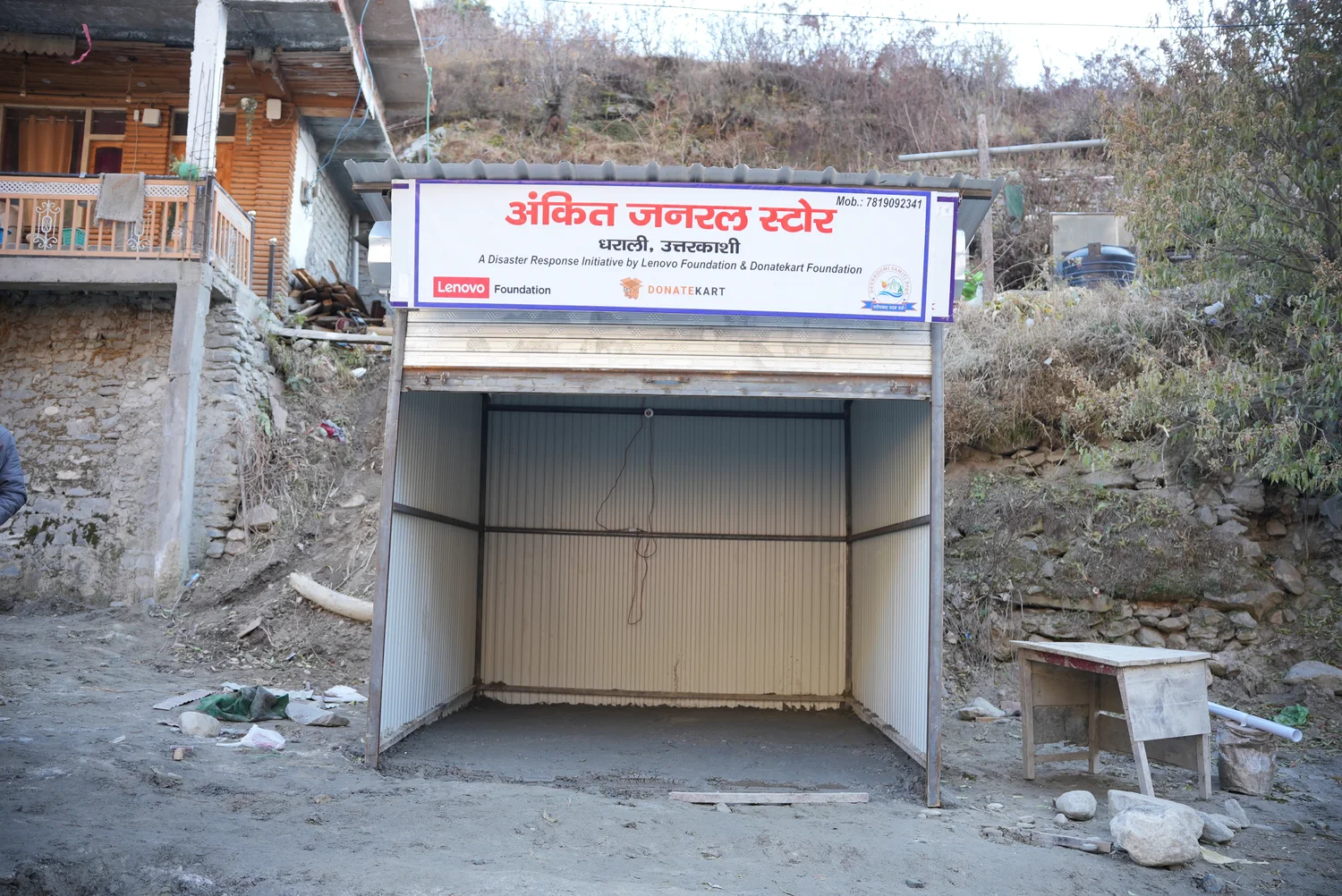
Dev Bhoomi Samiti supported Satendra through the Dharali shop rehabilitation project, with support from Donatekart and Lenovo Foundation. The assistance focused on building a shop that could become a base for local trade.
The team assessed the damage to his livelihood and verified land for construction with local involvement. The selected site was near the orchard belt. It required levelling, and the boundary and suitability of the location were considered before the structure was built.
The resulting tin shop provided covered space for goods and a place from which to sell them. This gave Satendra a working base at a time when the damage to his hotel and orchard had disrupted his previous income.
The support fitted a practical opportunity in the local economy. A shop could be used for apples, other produce and everyday goods, allowing him to restart trading while wider recovery continued. Space for storage was important alongside space for sales.
Our role was to help restore those conditions for work. The project brought together construction support, local verification and the family's need for income, giving Satendra premises that he could use with his own experience of the area and its trade.
What changed
Satendra began selling apples and daily-use goods again. The shop provided a place for sales and for keeping produce, creating a renewed opportunity to earn after the disaster had interrupted several sources of income.
This helped the family regain a measure of financial stability. Trading gave daily life a working base again, and the availability of premises meant that Satendra could focus on putting the space to use.
The orchard and hotel had each been important to his earlier livelihood. The new shop provided support during a period when those losses still shaped the family's circumstances. It created an immediate way to work while the larger process of recovery continued.
For Satendra, a usable shop brought confidence as well as income opportunities. He had a place connected to the local economy where he could restart familiar activity and contribute to his household again.
His story shows why disaster recovery needs to consider the different ways a family earns. The project responded to widespread loss with one practical asset, giving him a route back into trade and a basis for the next steps.