Tula Singh: A wheelchair and everyday support
After losing a leg, Tula Singh received a wheelchair, meal support and companionship through Dev Bhoomi Samiti’s work with older people.
Life before support
Tula Singh had once worked in the fields, with movement and physical effort forming part of everyday life. By the age of about seventy, that routine had changed greatly. He had lived with leprosy for years and had undergone a leg amputation. Walking was no longer possible for him.
The loss affected more than how he moved. Activities connected with his earlier life became difficult to reach, and he spent much of his time alone in a small room. The distance between the life he remembered and the circumstances around him had become painful.
Limited mobility also made it harder to meet basic needs. Food and personal support had to be accessible to him, while opportunities to spend time with others depended increasingly on people coming to where he was.
Tula Singh needed assistance that addressed these connected difficulties. A mobility aid could help with the practical consequences of losing a leg. Meal support could help with daily nourishment. Companionship could respond to the isolation that had grown around both.
How we helped
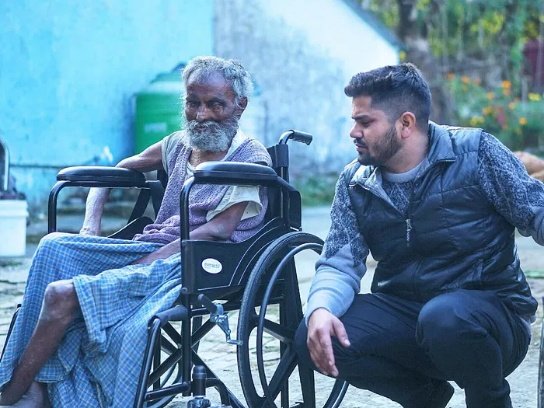
Dev Bhoomi Samiti provided Tula Singh with a wheelchair. It gave him an aid suited to a life in which walking was no longer possible, opening up a way to move with support. The wheelchair addressed a specific barrier that had come to dominate his routine.
Our team also brought meals and spent time with him. Food assistance helped with a need that remained constant regardless of his mobility. Contact with the team gave him company and a chance to be heard after a period of feeling forgotten.
The different parts of the assistance were intended to work together. A wheelchair addressed movement; meals supported everyday needs; visits brought people into his life. Each answered a part of what he was facing after the amputation.
There was also significance in how the support arrived. The team came to his door, meeting him in the circumstances he was living in. He could receive help without first overcoming the very mobility difficulty for which he needed assistance.
What changed
Tula Singh had a wheelchair available to help with movement, along with meal support and companionship. These were practical additions to a daily life that had become restricted by physical limitations and loneliness.
He continued to live with the consequences of losing a leg. The wheelchair offered an alternative way of moving, while food and personal contact helped him manage other parts of the day. Together, the support made his circumstances less isolating.
The renewed contact also brought reassurance. He was being seen and supported, with people responding to both his practical needs and his need for company. The experience gave him a greater sense that his life still mattered to those around him.
Tula Singh's story is rooted in this combination of useful equipment and continuing care. A wheelchair was a significant part of the help, and the meals and human connection alongside it gave that help a place in everyday life.