Gauri Devi: Sharing food and conversation
Gauri Devi received rations, fresh vegetables and company through Dev Bhoomi Samiti’s elder care work, bringing support into a lonely daily routine.
Life before support
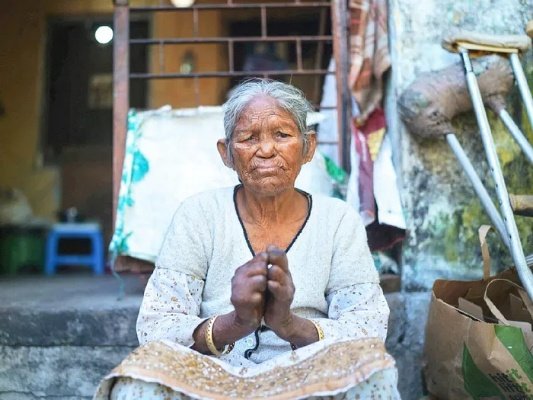
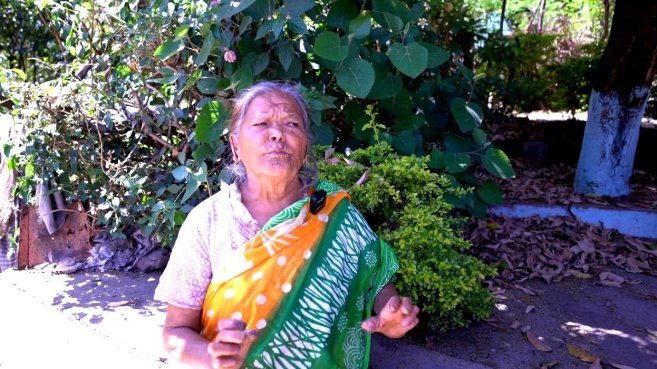
Gauri Devi was around eighty-five when Dev Bhoomi Samiti became involved in her care. She lived in a mountain village, where the effects of leprosy and advancing age had made daily life more difficult. Changes to her hands and limbs affected what she could do, while loneliness had gradually narrowed her contact with others.
Her days held few opportunities for company. Physical difficulties made it harder to move about, and the distance people kept from her added to that separation. The ordinary pleasure of sitting with someone, exchanging news or sharing a meal had become scarce.
Gauri Devi needed help with food and the essentials of daily living. Those needs were closely tied to her circumstances at home. When getting out is difficult, arranging supplies can become another burden, and a person may spend more time alone as a result.
Understanding her situation meant paying attention to both sides of it. She needed practical assistance with meals and supplies, and she needed contact with people who were comfortable spending time with her. Her life still held a need for conversation, friendship and the feeling of being included.
How we helped
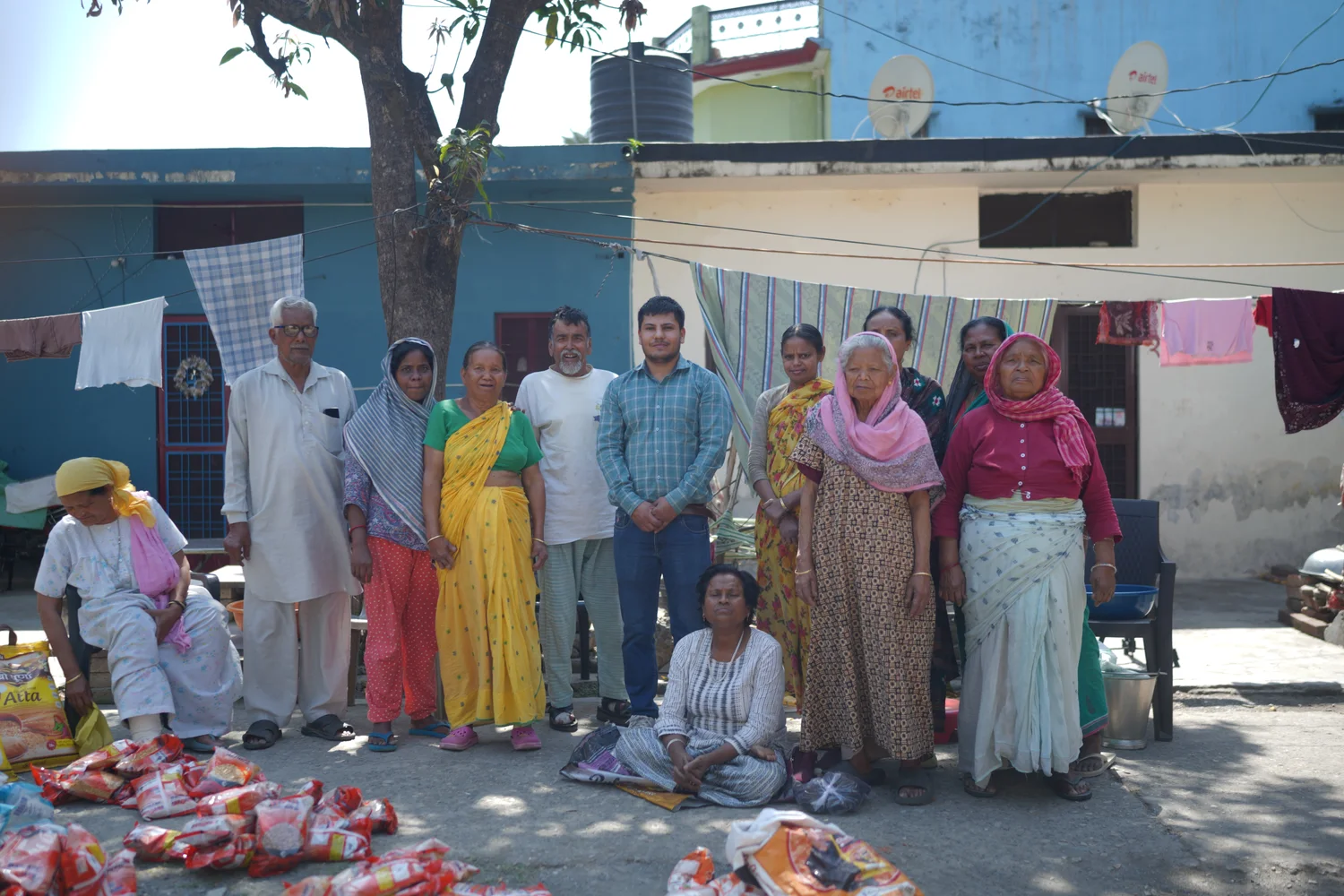
Our team visited Gauri Devi with food, ration supplies and fresh vegetables. Bringing these items to her helped with the immediate task of having something available for her meals. Food support gave her assistance with a basic need that continued from day to day.
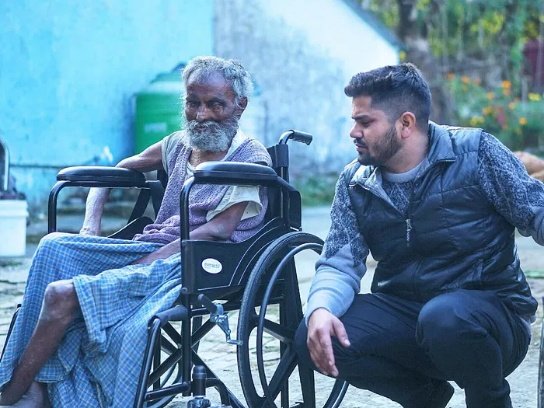
The visits also made space for company. Team members sat with her, listened and talked. Their time together included the simple exchanges that form a relationship: conversation, shared stories and moments of laughter. Gauri Devi had people who were willing to stay and engage with her.
This personal contact was part of the care. A visit could bring the supplies she needed and an opportunity to express what she was experiencing. The team responded to the loneliness around her as well as the practical difficulties caused by age and illness.
Food assistance and companionship supported one another. Regular contact helped make the relationship familiar, while practical help showed that her concerns were being taken seriously. Gauri Devi could receive support in surroundings she knew, with people who treated her warmly.
What changed
The arrival of food and essentials eased part of Gauri Devi's daily burden. The visits brought another change: there was more room in her life for conversation and friendship. She became less isolated as contact with the team continued.
She found comfort and strength in that company. Time spent together gave her something beyond managing the next practical need—a chance to feel connected to other people and to be recognised as someone whose life and experiences mattered.
Her physical difficulties remained part of her story. The help she received made those circumstances less lonely and gave her support with the daily needs around them. For Gauri Devi, sharing food and sharing time were both meaningful parts of care.