Kaushila Devi: Essentials delivered to her door
For Kaushila Devi, advanced age made getting out difficult. Dev Bhoomi Samiti brought rations, daily essentials and companionship to her.
Life before support
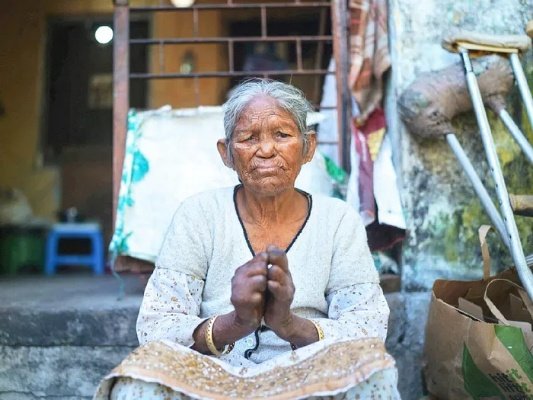
At around ninety-five, Kaushila Devi was living with advanced frailty and the effects of leprosy. Her legs could no longer carry her as they once had, and going out to meet everyday needs had become very difficult. The physical limits around her life were accompanied by a deep sense of isolation.
She had experienced people keeping their distance and had grown used to receiving little attention. The absence of visitors made her circumstances lonelier. When a person is unable to move about easily, that lack of contact can leave even ordinary needs without someone nearby to respond.
For Kaushila Devi, food and essential supplies were important concerns. Access mattered as much as availability: assistance needed to come within her reach. Expecting her to travel to obtain help would have left the central difficulty unresolved.
Her situation also called for a personal response. She needed to be approached with care and to feel included in the lives of other people. The support that followed addressed both the practical restrictions of her age and the loneliness she had been carrying.
How we helped
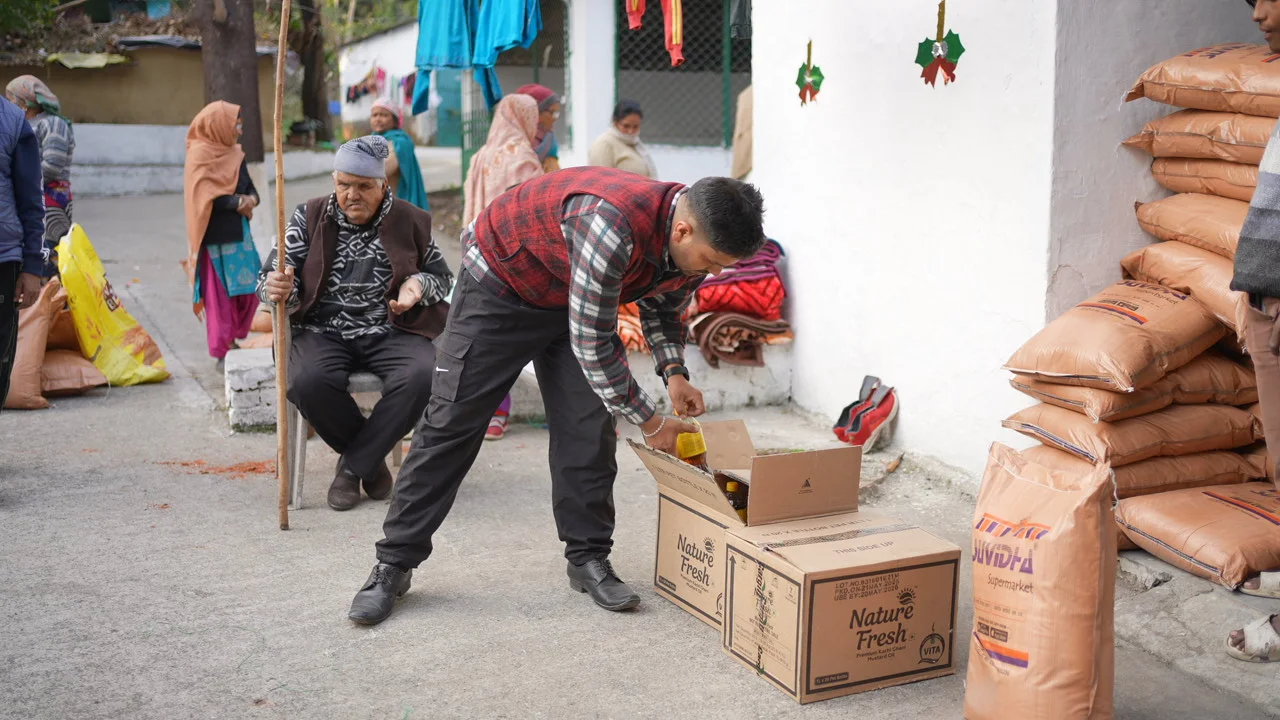
Dev Bhoomi Samiti reached Kaushila Devi with ration supplies and everyday essentials. Bringing these items to her helped with needs she was no longer able to meet easily on her own. The assistance was shaped around reaching her where she was.
Our team's presence also brought companionship. Time spent with her meant that she could receive attention as well as supplies. She was treated as someone whose comfort and concerns deserved a response.
For a woman living with such limited mobility, receiving support at her door had a clear purpose. It removed the need to make a difficult journey before help could begin. The same contact also made room for company in a life that had become quiet and isolated.
This was a form of elder care centred on daily living. Food, essential items and a caring relationship helped answer needs that were continuing, personal and closely connected. The way the team engaged with Kaushila Devi was part of the assistance itself.
What changed
Kaushila Devi received supplies for daily use and experienced a renewed sense of being cared for. People were reaching her, paying attention to her needs and offering help within the limits of her mobility.
That contact mattered after a long period of loneliness. The presence of the team brought warmth into her days and helped her feel that she belonged among people who were willing to make time for her.
Her advanced age and frailty remained central to the care she needed. The change lay in making those circumstances less unsupported: essentials came to her, and she had company alongside practical assistance.
Kaushila Devi's experience shows the value of taking help to an older person who cannot readily go out to seek it. Reaching her was the first step; treating her with patience and dignity gave that help its meaning.